 POWER SYSTEMS |
 NEWS NEWS  EVENTS EVENTS |
 BOOKS BOOKS  BLOG BLOG |
 UNIVERSITIES UNIVERSITIES  NIKOLA TESLA NIKOLA TESLA |
 LINKS LINKS  CONTACT CONTACT |
 |
POWER SYSTEMS |
 |
| BLOG
EEE
< PREVIOUS EEE
NEXT > 2021 Report: Clean Energy Powers America Nuclear Power Status 2021 Grid Integration of Electric Vehicles 2022 Hydropower Status Report Global Energy Monitor Offshore wind power Power System for a Carbon Neutral Europe
< PREVIOUS EEEEEE
NEXT >
Showing 148 to 154 from 168 blogs In order to extend the content of this website, we invite you to contribute any information, including news, events, books, blog posts, universities, links, etc., you find helpful about power system engineering.
POWER SYSTEMS 

|
EE - Offshore wind power Offshore wind power or offshore wind energy is the generation of electricity through wind farms in bodies of water, usually at sea. There are higher wind speeds offshore than on land, so offshore farms generate more electricity per amount of capacity installed. Offshore wind farms are also less controversial than those on land, as they have less impact on people and the landscape. Unlike the typical use of the term "offshore" in the marine industry, offshore wind power includes inshore water areas such as lakes, fjords and sheltered coastal areas as well as deeper-water areas.  Most offshore wind farms employ fixed-foundation wind turbines in relatively shallow water. As of 2020, floating wind turbines for deeper waters were in the early phase of development and deployment. Fixed foundation offshore wind turbines have fixed foundations underwater, and are installed in relatively shallow waters of up to 50 to 60 meters (160 to 200 ft). 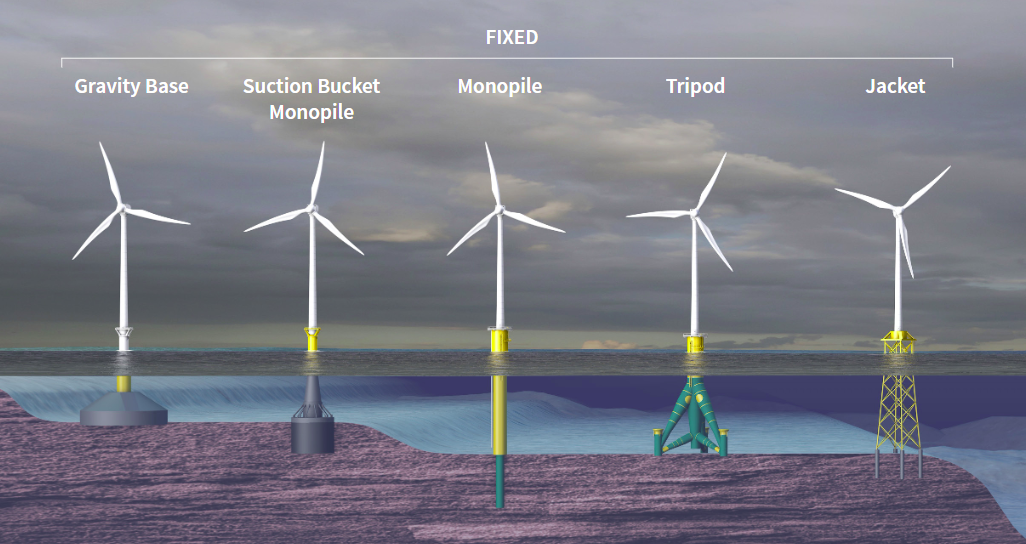 Types of underwater structures include monopile, tripod, and jacketed, with various foundations at the sea floor including monopile or multiple piles, gravity base, and caissons. Offshore turbines require different types of bases for stability, according to the depth of water. To date a number of different solutions exist: Most foundations are monopile (single column) base, six metres (20 ft) in diameter, is used in waters up to 30 metres (100 ft) deep. Conventional steel jacket structures, as used in the oil and gas industry, in water 20–80 metres (70–260 ft) deep. Gravity base structures, for use at exposed sites in water 20–80 m deep. Tripod piled structures, in water 20–80 m deep. Tripod suction caisson structures, in water 20–80 m deep. For locations with depths over about 60–80 m, fixed foundations are uneconomical or technically unfeasible, and floating wind turbines anchored to the ocean floor are needed. Blue H Technologies, which was ultimately acquired by Seawind Ocean Technology, installed the world`s first floating wind turbine in 2007. Hywind is the world`s first full-scale floating wind turbine, installed in the North Sea off Norway in 2009. Hywind Scotland, commissioned in October 2017, is the first operational floating wind farm, with a capacity of 30 MW. Other kinds of floating turbines have been deployed, and more projects are planned. 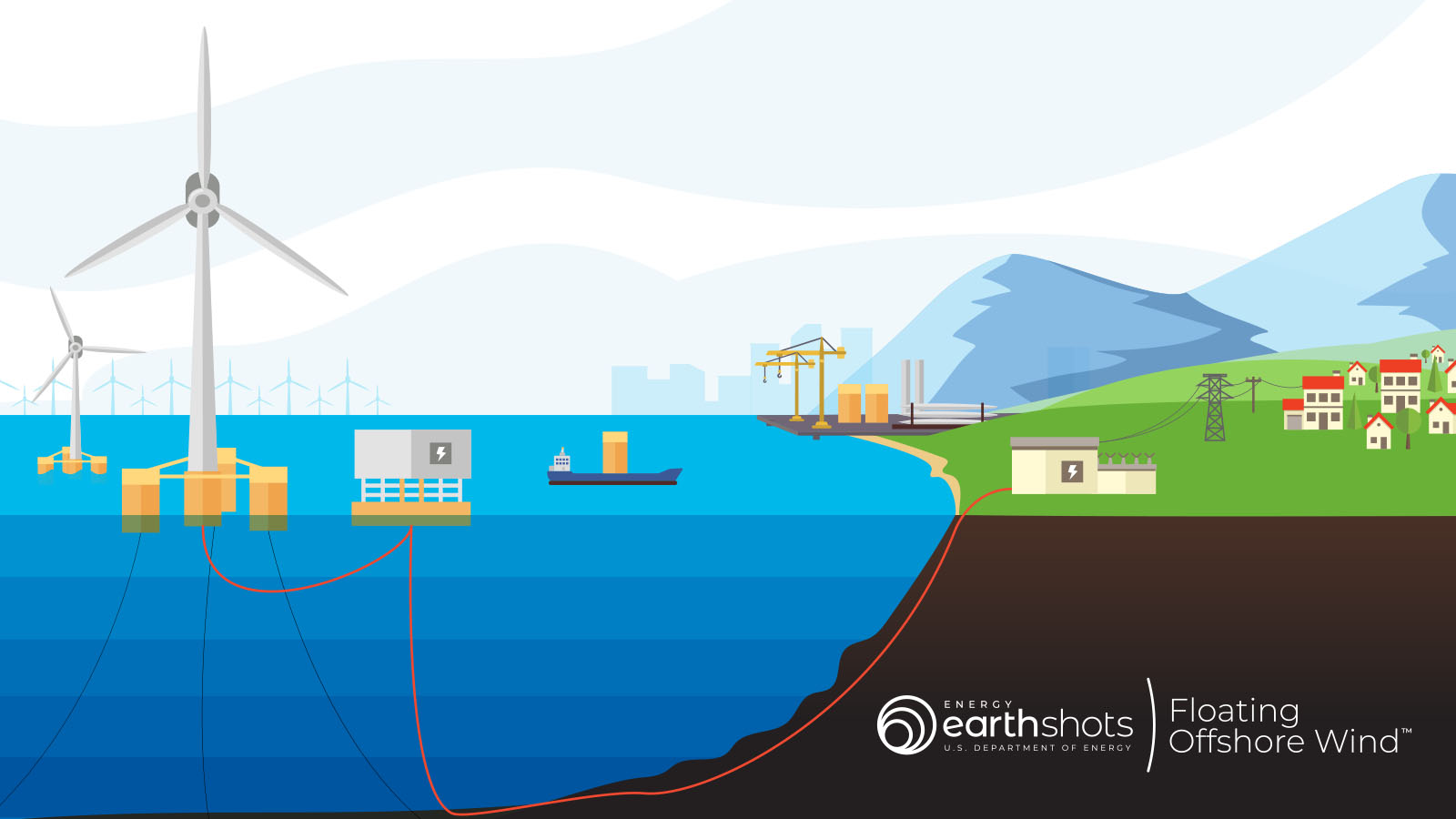 A wind turbine`s hub height is the distance from the ground to the middle of the turbine`s rotor. A turbine’s rotor diameter, or the width of the circle swept by the rotating blades, has also grown over the years. In addition to getting taller and bigger, wind turbines have also increased in maximum power rating, or capacity. 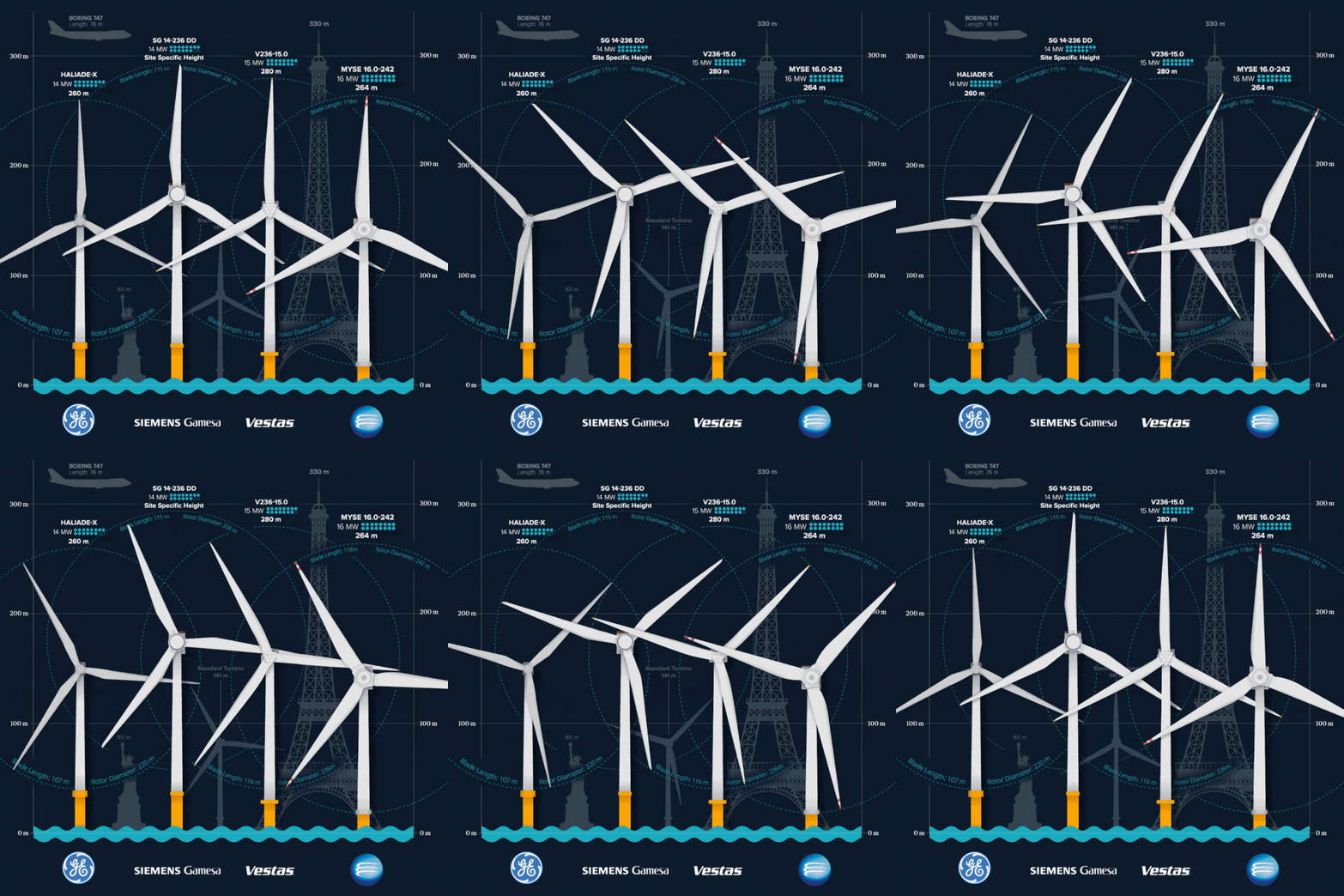 Offshore wind energy capacity worldwide from 2009 to 2021 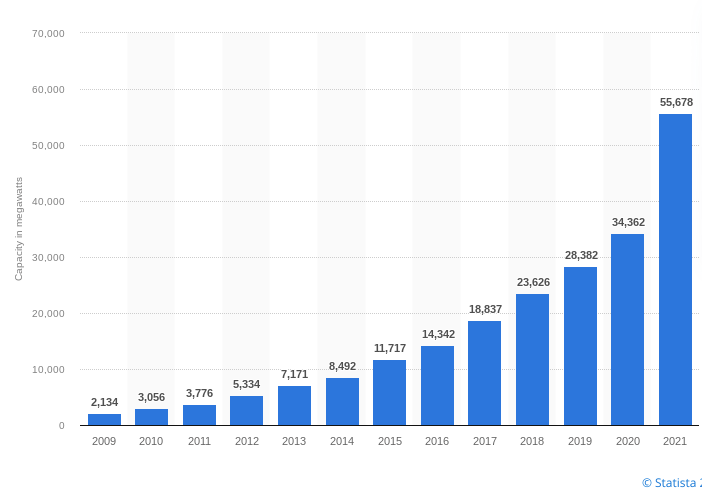 |