 POWER SYSTEMS |
 NEWS NEWS  EVENTS EVENTS |
 BOOKS BOOKS  BLOG BLOG |
 UNIVERSITIES UNIVERSITIES  NIKOLA TESLA NIKOLA TESLA |
 LINKS LINKS  CONTACT CONTACT |
 |
POWER SYSTEMS |
 |
| BLOG
EEE
< PREVIOUS EEE
NEXT > 2021 Report: Clean Energy Powers America Nuclear Power Status 2021 Grid Integration of Electric Vehicles 2022 Hydropower Status Report Global Energy Monitor Offshore wind power Power System for a Carbon Neutral Europe
< PREVIOUS EEEEEE
NEXT >
Showing 148 to 154 from 168 blogs In order to extend the content of this website, we invite you to contribute any information, including news, events, books, blog posts, universities, links, etc., you find helpful about power system engineering.
POWER SYSTEMS 

|
IHA - 2022 Hydropower Status Report The 2022 Hydro power Status Report found that 26 GW of new capacity was put into operation during 2021. This falls well short of the 45 GW that the International Energy Agency (IEA) says is required to meet net zero goals by 2050 and keep global temperature rises to 1.5°C. To keep temperature rises to 2°C would require 30 GW annually. “The 2022 Hydro power Status Report is a stark wake-up call to governments around the world that we are falling short of the progress that is needed,” says IHA Chief Executive Eddie Rich. Download PDF file 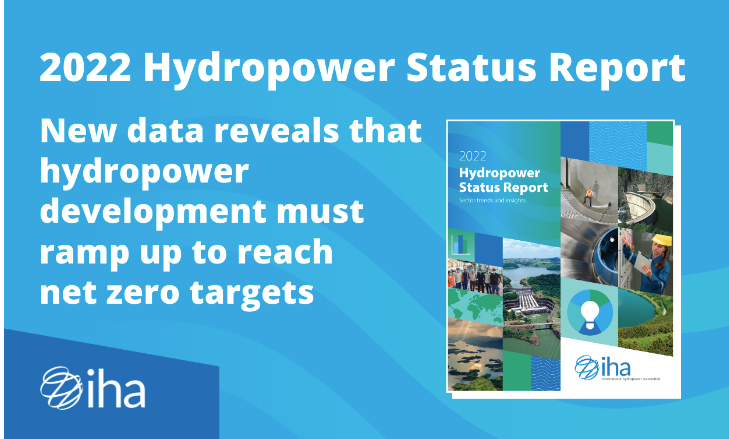 The 2022 Hydro power Status Report finds that: * Global installed hydro power capacity rose by 26 GW to 1360 GW in 2021 4,250 TWh of clean electricity was generated from hydropower, 1 and a half times the entire electricity consumption of the EU * Around 80% of new hydro power capacity installed in 2021 was in a single country – China * 4.7 GW of pumped storage hydro power was added to the grid, triple the amount added in 2020. 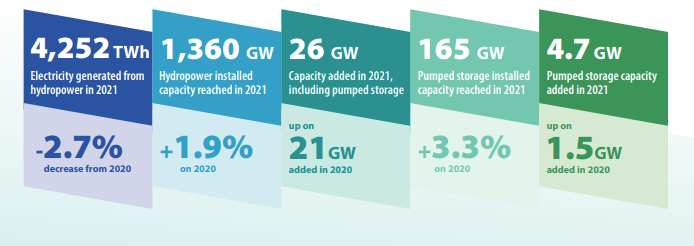 “We can supercharge the progress firstly by accelerating the development of pumped storage hydro power around the world. Secondly, we need to look towards the immense untapped hydro power potential that exists in many regions of the world, particularly Asia and Africa. Finally, we need to make the most of our existing hydro power fleet by modernizing it, as well as integrating hydro power facilities into non-power water infrastructure wherever suitable. “We have the technology to achieve net zero and the knowledge to deliver it sustainably. All that`s needed is the political will to make it happen.” Dr Ashok Khosla, Chair of the Hydro power Sustainability Council, said: “Our urgent need for more energy absolutely must be met with low-carbon sources, such wind, solar and hydro power. At the same time, this needs to be done with sensitivity to environmental and social concerns. “The multi-stakeholder Hydro power Sustainability Standard is the internationally recognized benchmark for good practice and should be embedded in the policies of governments and practices of others to ensure that they can move quickly and sustainably to invest in more hydro power, to enable the transition away from fossil fuels.” 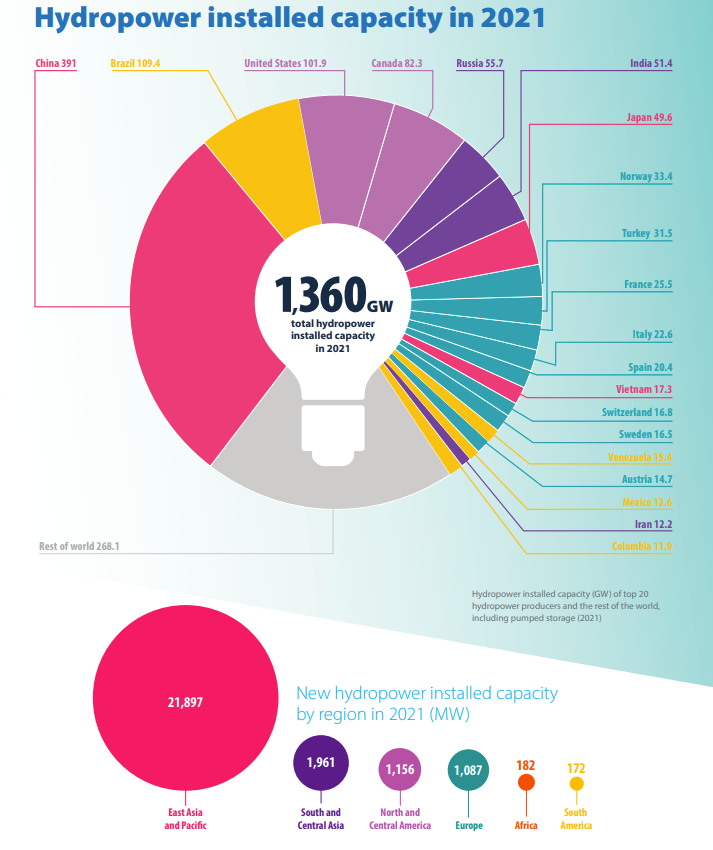 Erik Solheim, former Executive Director of the UN Environment Programme, said: “IHA`s Hydro power Status Report underlines the urgent need for more sustainable hydro power, to support a successful transition to fully renewable future energy systems. This can`t wait – governments need to heed this call to action, or we all face an uncertain and unstable energy future.” The development of sustainable hydro power, with its ability to provide both flexible and reliable power, is needed to support the growth of other renewable sources such as wind and solar, and to avoid reverting to the use of fossil fuels, such as coal. Certifying these developments against the Standard will ensure that any new development is delivered responsibly and delivers net positive benefits to society and the environment. Comparing development by country, the report shows that China leads the way with around 80% of the new global capacity in 2021 being installed in the country. China is already the world leader for installed hydro power capacity with over 390 GW – more than three times the next largest country, Brazil. Notable projects that came online during 2021 include the 824 MW Muskrat Falls Hydroelectric Generating Station, part of the Lower Churchill Project in Canada; the remaining 600 MW of capacity at Laos` 1,272 MW Nam Ou plant; Nepal`s 456 MW Upper Tamakoshi project; units 3 and 4 of Kameng Hydro power Station in India, adding 300 MW; and a 324 MW unit added at the Dnesiter pumped storage plant in Ukraine, raising the plant’s installed capacity to 1,296 MW. |