 POWER SYSTEMS |
 NEWS NEWS  EVENTS EVENTS |
 BOOKS BOOKS  BLOG BLOG |
 UNIVERSITIES UNIVERSITIES  NIKOLA TESLA NIKOLA TESLA |
 LINKS LINKS  CONTACT CONTACT |
 |
POWER SYSTEMS |
 |
| BLOG
EEE
< PREVIOUS EEE
NEXT > DynPOWER 2022 materials Energy Transition Readiness Index 2021 NASPI materials Tesla Unwired Voltage and frequency AC power plugs and sockets Wind energy in Europe
< PREVIOUS EEEEEE
NEXT >
Showing 155 to 161 from 168 blogs In order to extend the content of this website, we invite you to contribute any information, including news, events, books, blog posts, universities, links, etc., you find helpful about power system engineering.
POWER SYSTEMS 

|
EE - AC power plugs and sockets AC power plugs and sockets connect electric equipment to the alternating current (AC) mains electricity power supply in buildings and at other sites. Electrical plugs and sockets differ from one another in voltage and current rating, shape, size, and connector type. Different standard systems of plugs and sockets are used around the world. Plugs and sockets for portable appliances became available in the 1880s, to replace connections to light sockets with wall-mounted outlets. A proliferation of types developed for both convenience and protection from electrical injury. Today[when?] there are about 20 types in common use around the world, and many obsolete socket types are found in older buildings. Coordination of technical standards has allowed some types of plug to be used across large regions to facilitate trade in electrical appliances, and for the convenience of travellers and consumers of imported electrical goods. Some multi-standard sockets allow use of several types of plug; improvised or unapproved adaptors between incompatible sockets and plugs may not provide the full safety and performance of an approved socket-plug combination.  Designs of plugs and sockets have gradually developed to reduce the risk of electric shock and fire. Plugs are shaped to prevent finger contact with live parts. Sockets may be recessed and plugs designed to fit closely within the recess to reduce risk of a user`s fingers contacting the live pins. Contact pins may be sheathed with insulation over part of their length, so as to reduce exposure of energized metal during insertion or removal of the socket. Sockets may have automatic shutters to stop foreign objects from being inserted into energized contacts. Adapters between standards are not included in the standards, and as a result they have no formal quality criteria defined. Physical compatibility does not ensure that the appliance and socket match in frequency or voltage. Adaptors allow travellers to connect devices to foreign sockets, but do not change voltage or frequency. A voltage converter is required for electrical compatibility in places with a different voltage than the device is designed for. Mismatch in frequency between supply and appliances may still cause problems even at the correct voltage. 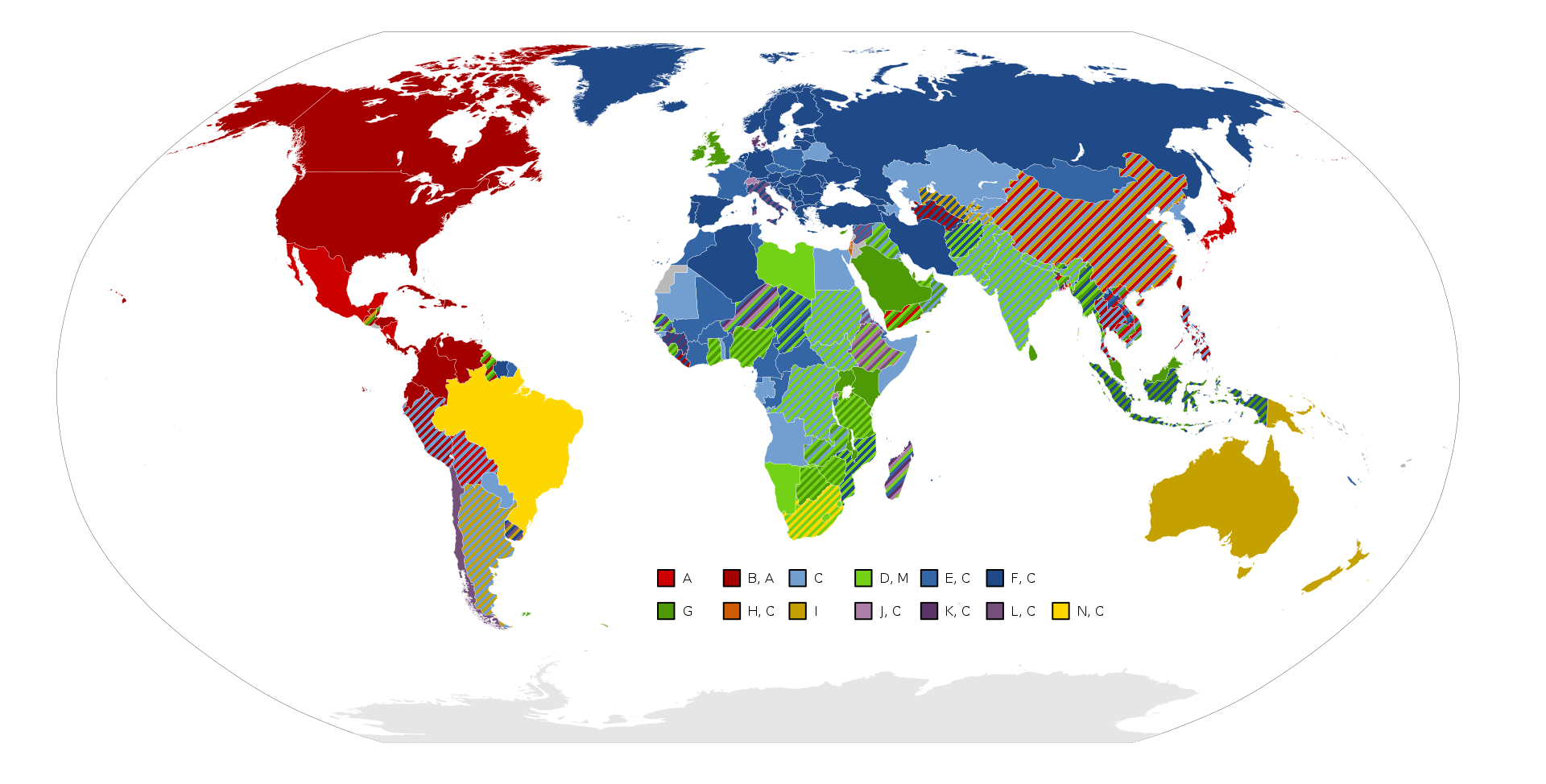
|