 |
|||

POWER SYSTEMS |
|||
HISTORY Early Years In 1881, two electricians built the world's first power system at Godalming in England. It was powered by two water wheels and produced an alternating current that in turn supplied seven Siemens arc lamps at 250 volts and 34 incandescent lamps at 40 volts. However, supply to the lamps was intermittent and in 1882 Thomas Edison and his company, Edison Electric Light Company, developed the first steam-powered electric power station on Pearl Street in New York City. The Pearl Street Station initially powered around 3,000 lamps for 59 customers. The power station generated direct current and operated at a single voltage. Direct current power could not be transformed easily or efficiently to the higher voltages necessary to minimize power loss during long-distance transmission, so the maximum economic distance between the generators and load was limited to around half a mile (800 m). That same year in London, Lucien Gaulard and John Dixon Gibbs demonstrated the "secondary generator"—the first transformer suitable for use in a real power system. The practical value of Gaulard and Gibbs' transformer was demonstrated in 1884 at Turin where the transformer was used to light up 40 kilometers (25 miles) of railway from a single alternating current generator. Despite the success of the system, the pair made some fundamental mistakes. Perhaps the most serious was connecting the primaries of the transformers in series so that active lamps would affect the brightness of other lamps further down the line. In 1885, Ottó Titusz Bláthy working with Károly Zipernowsky and Miksa Déri perfected the secondary generator of Gaulard and Gibbs, providing it with a closed iron core and its present name: the "transformer". The three engineers went on to present a power system at the National General Exhibition of Budapest that implemented the parallel AC distribution system proposed by a British scientist[a] in which several power transformers have their primary windings fed in parallel from a high-voltage distribution line. The system lit more than 1000 carbon filament lamps and operated successfully from May until November of that year. Also in 1885 George Westinghouse, an American entrepreneur, obtained the patent rights to the Gaulard-Gibbs transformer and imported a number of them along with a Siemens generator, and set his engineers to experimenting with them in hopes of improving them for use in a commercial power system. In 1886, one of Westinghouse's engineers, William Stanley, independently recognized the problem with connecting transformers in series as opposed to parallel and also realized that making the iron core of a transformer a fully enclosed loop would improve the voltage regulation of the secondary winding. Using this knowledge he built a multi-voltage transformer-based alternating-current power system serving multiple homes and businesses at Great Barrington, Massachusetts in 1886. The system was unreliable and short-lived, though, due primarily to generation issues. However, based on that system, Westinghouse would begin installing AC transformer systems in competition with the Edison Company later that year. In 1888, Westinghouse licensed Nikola Tesla's patents for a polyphase AC induction motor and transformer designs. Tesla consulted for a year at the Westinghouse Electric & Manufacturing Company's but it took a further four years for Westinghouse engineers to develop a workable polyphase motor and transmission system. By 1889, the electric power industry was flourishing, and power companies had built thousands of power systems (both direct and alternating current) in the United States and Europe. These networks were effectively dedicated to providing electric lighting. During this time the rivalry between Thomas Edison and George Westinghouse's companies had grown into a propaganda campaign over which form of transmission (direct or alternating current) was superior, a series of events known as the "war of the currents". In 1891, Westinghouse installed the first major power system that was designed to drive a 100 horsepower (75 kW) synchronous electric motor, not just provide electric lighting, at Telluride, Colorado. On the other side of the Atlantic, Mikhail Dolivo-Dobrovolsky and Charles Eugene Lancelot Brown, built the first long-distance (175 kilometers (109 miles)) high-voltage (15 kV, then a record) three-phase transmission line from Lauffen am Neckar to Frankfurt am Main for the Electrical Engineering Exhibition in Frankfurt, where power was used to light lamps and run a water pump. In the United States the AC/DC competition came to an end when Edison General Electric was taken over by their chief AC rival, the Thomson-Houston Electric Company, forming General Electric. In 1895, after a protracted decision-making process, alternating current was chosen as the transmission standard with Westinghouse building the Adams No. 1 generating station at Niagara Falls and General Electric building the three-phase alternating current power system to supply Buffalo at 11 kV. 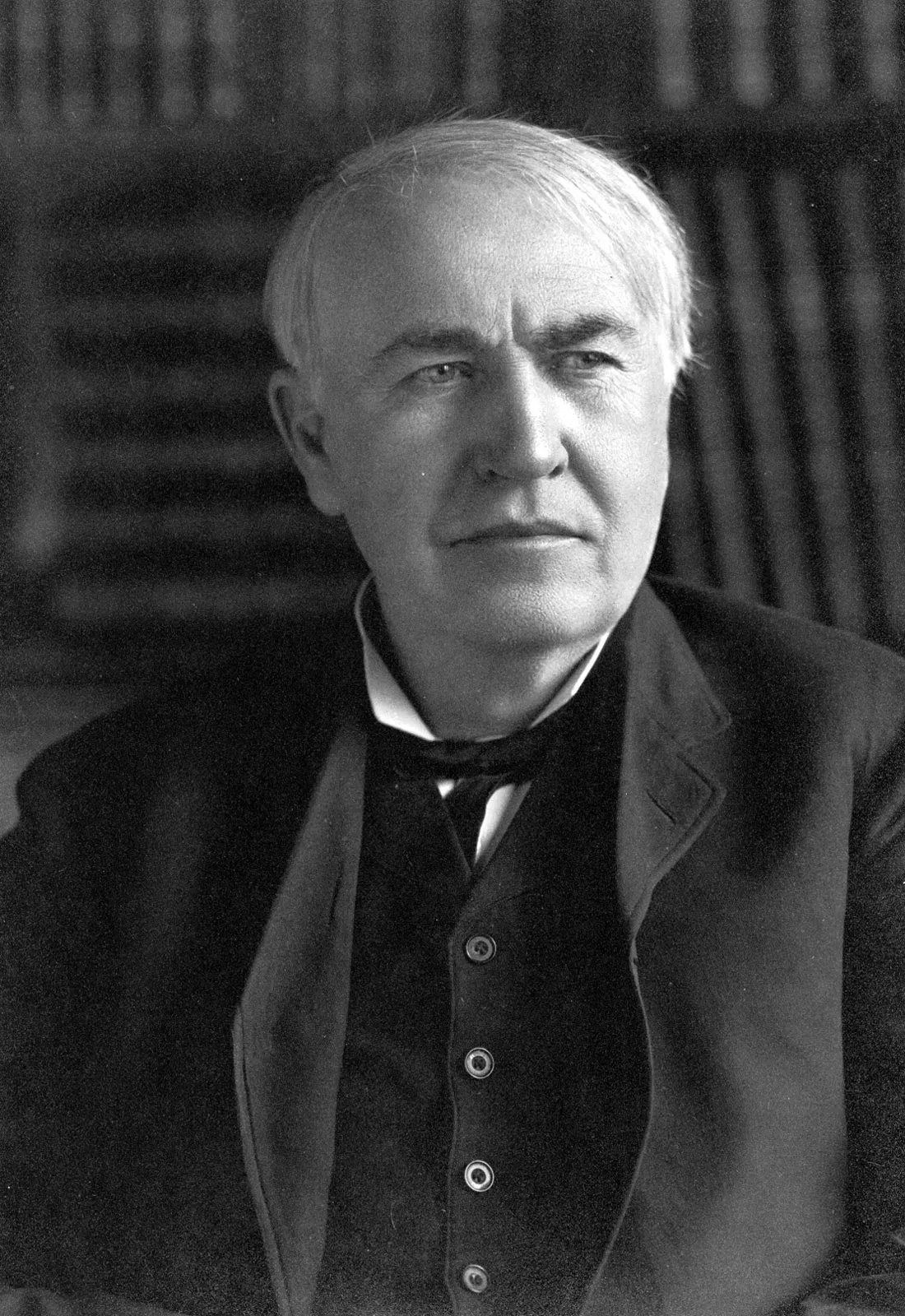 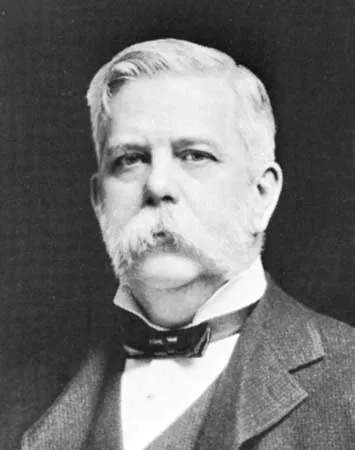 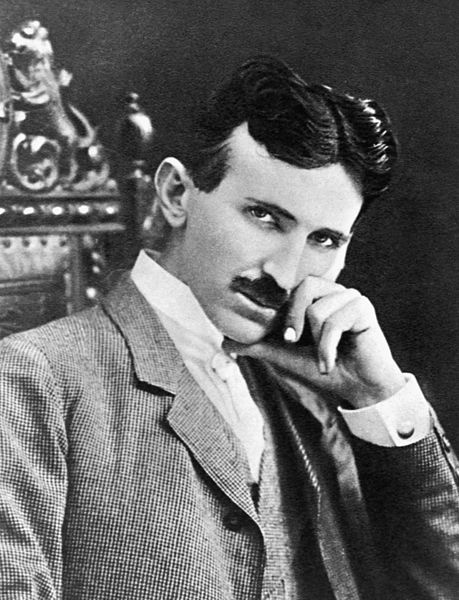
In the United Kingdom, Charles Merz, of the Merz & McLellan consulting partnership, built the Neptune Bank Power Station near Newcastle upon Tyne in 1901,and by 1912 had developed into the largest integrated power system in Europe.Merz was appointed head of a parliamentary committee and his findings led to the Williamson Report of 1918, which in turn created the Electricity (Supply) Act 1919. The bill was the first step towards an integrated electricity system. The Electricity (Supply) Act 1926 led to the setting up of the National Grid. The Central Electricity Board standardized the nation's electricity supply and established the first synchronized AC grid, running at 132 kilovolts and 50 hertz. This started operating as a national system, the National Grid, in 1938. In the United States in the 1920s, utilities formed joint-operations to share peak load coverage and backup power. In 1934, with the passage of the Public Utility Holding Company Act (USA), electric utilities were recognized as public goods of importance and were given outlined restrictions and regulatory oversight of their operations. The Energy Policy Act of 1992 required transmission line owners to allow electric generation companies open access to their network and led to a restructuring of how the electric industry operated in an effort to create competition in power generation. No longer were electric utilities built as vertical monopolies, where generation, transmission and distribution were handled by a single company. Now, the three stages could be split among various companies, in an effort to provide fair access to high voltage transmission.The Energy Policy Act of 2005 allowed incentives and loan guarantees for alternative energy production and advance innovative technologies that avoided greenhouse emissions. In France, electrification began in the 1900s, with 700 communes in 1919, and 36,528 in 1938. At the same time, these close networks began to interconnect: Paris in 1907 at 12 kV, the Pyrénées in 1923 at 150 kV, and finally almost all of the country interconnected by 1938 at 220 kV. In 1946, the grid was the world's most dense. That year the state nationalised the industry, by uniting the private companies as Électricité de France. The frequency was standardised at 50 Hz, and the 225 kV network replaced 110 kV and 120 kV. Since 1956, service voltage has been standardised at 220/380 V, replacing the previous 127/220 V. During the 1970s, the 400 kV network, the new European standard, was implemented. Developments in power systems continued beyond the nineteenth century. In 1936 the first experimental high voltage direct current (HVDC) line using mercury arc valves was built between Schenectady and Mechanicville, New York. HVDC had previously been achieved by series-connected direct current generators and motors (the Thury system) although this suffered from serious reliability issues. The first solid-state metal diode suitable for general power uses was developed by Ernst Presser at TeKaDe in 1928. It consisted of a layer of selenium applied on an aluminum plate. In 1957, a General Electric research group developed the first thyristor suitable for use in power applications, starting a revolution in power electronics. In that same year, Siemens demonstrated a solid-state rectifier, but it was not until the early 1970s that solid-state devices became the standard in HVDC, when GE emerged as one of the top suppliers of thyristor-based HVDC. In 1979, a European consortium including Siemens, Brown Boveri & Cie and AEG realized the record HVDC link from Cabora Bassa to Johannesburg, extending more than 1,420 kilometers (880 miles) that carried 1.9 GW at 533 kV. In recent times, many important developments have come from extending innovations in the information and communications technology (ICT) field to the power engineering field. For example, the development of computers meant load flow studies could be run more efficiently, allowing for much better planning of power systems. Advances in information technology and telecommunication also allowed for effective remote control of a power system's switchgear and generators. AC/DC Electricity was first introduced to New York in the late 1870s. Edison's incandescent lamp had created an astonishing demand for electric power. And his DC power station on Pearl Street in lower Manhattan was quickly becoming a monopoly. On the streets, single poles carried dozens of crooked crossbeams supporting sagging wires, and the exposed electrical wiring was a constant danger. Unsuspecting children would scale the poles only to meet an untimely electrical demise. The residents of Brooklyn became so accustomed to dodging shocks from electric trolley tracks that their baseball team was called the Brooklyn Dodgers. In spite of the perils, wealthy New Yorkers rushed to have their homes wired, the most important being the banker, J.P. Morgan, who had invested heavily in Edison. It was into this state of affairs that the 6'4" immigrant from Eastern Europe entered Edison's office. Thrilled and terrified to meet his hero, Tesla handed Edison his letter of recommendation: It read: "My Dear Edison: I know two great men and you are one of them. The other is this young man!" Tesla proceeded to describe the engineering work he had done, and his plans for an alternating current motor. Edison knew little of alternating current and did not care to learn more about it. In short, AC power sounded like competition to Edison. But there was something different about Tesla, and Edison immediately hired him to make improvements in his DC generation plants. Tesla claimed that Edison promised him $50,000 if he succeeded, perhaps thinking it an impossible undertaking. But the potential of so much money appealed mightily to the impoverished immigrant. Both Tesla and Edison shared a common trait of genius in that neither of them seemed to need much sleep. Edison could go for days, taking occasional catnaps on a sofa in his office. Tesla claimed that his working hours at the Edison Machine Works were 10:30 a.m. till 5 a.m. the next day. Even into old age Tesla said he only slept two or three hours a night. That's where the similarity ended. Tesla relied on moments of inspiration, perceiving the invention in his brain in precise detail before moving to the construction stage. Edison was a trial and error man who described invention as five percent inspiration and 95 percent perspiration. Edison was self-taught. Tesla had a formal European education. It was only a matter of time until their differences would lead to conflict. Several months after Edison employed him, Tesla announced that his work was successfully completed. When Tesla asked to be paid, however, Edison seemed astonished. He explained that the offer of $50,000 had been made in jest. "When you become a full-fledged American you will appreciate an American joke," Edison said. Shocked and disgusted, Tesla immediately resigned. Word began to spread that a foreigner of unusual talent was digging ditches to stay alive. Investors approached Tesla and asked him to develop an improved method for arc lighting. Although this was not the opportunity he had hoped for, the group was willing to finance the Tesla Electric Light Company. The proud new owner set to work and invented a unique arc lamp of beautiful design and efficiency. Unfortunately, all of the money earned went to the investors and all Tesla got was a stack of worthless stock certificates. But his luck was about to change. Mr. A.K. Brown of the Western Union Company, agreed to invest in Tesla's idea for an AC motor. In a small laboratory just a short distance from Edison's office, Tesla quickly developed all the components for the system of AC power generation and transmission that is used universally throughout the world today. "The motors I build there," said Tesla, "were exactly as I imagined them. I made no attempt to improve the design, but merely reproduced the pictures as they appeared to my vision and the operation was always as I expected." The battle to produce his motor was over. But the struggle to introduce it commercially was only just beginning. War of the Currents In November and December of 1887, Tesla filed for seven U.S. patents in the field of polyphase AC motors and power transmission. These comprised a complete system of generators, transformers, transmission lines, motors and lighting. So original were the ideas that they were issued without a successful challenge, and would turn out to be the most valuable patents since the telephone. An adventurous Pittsburgh industrialist named George Westinghouse, inventor of railroad air brakes, heard about Tesla's invention and thought it could be the missing link in long-distance power transmission. He came to Tesla's lab and made an offer, purchasing the patents for $60,000, which included $5,000 in cash and 150 shares of stock in the Westinghouse Corporation. He also agreed to pay royalties of $2.50 per horsepower of electrical capacity sold. With more inventions in mind, Tesla quickly spent half of his newfound wealth on a new laboratory. With the breakthrough provided by Tesla's patents, a full-scale industrial war erupted. At stake, in effect, was the future of industrial development in the United States, and whether Westinghouse's alternating current or Edison's direct current would be the chosen technology. It was at this time that Edison launched a propaganda war against alternating current. Westinghouse recalled: I remember Tom [Edison] telling them that direct current was like a river flowing peacefully to the sea, while alternating current was like a torrent rushing violently over a precipice. Imagine that! Why they even had a professor named Harold Brown who went around talking to audiences... and electrocuting dogs and old horses right on stage, to show how dangerous alternating current was. 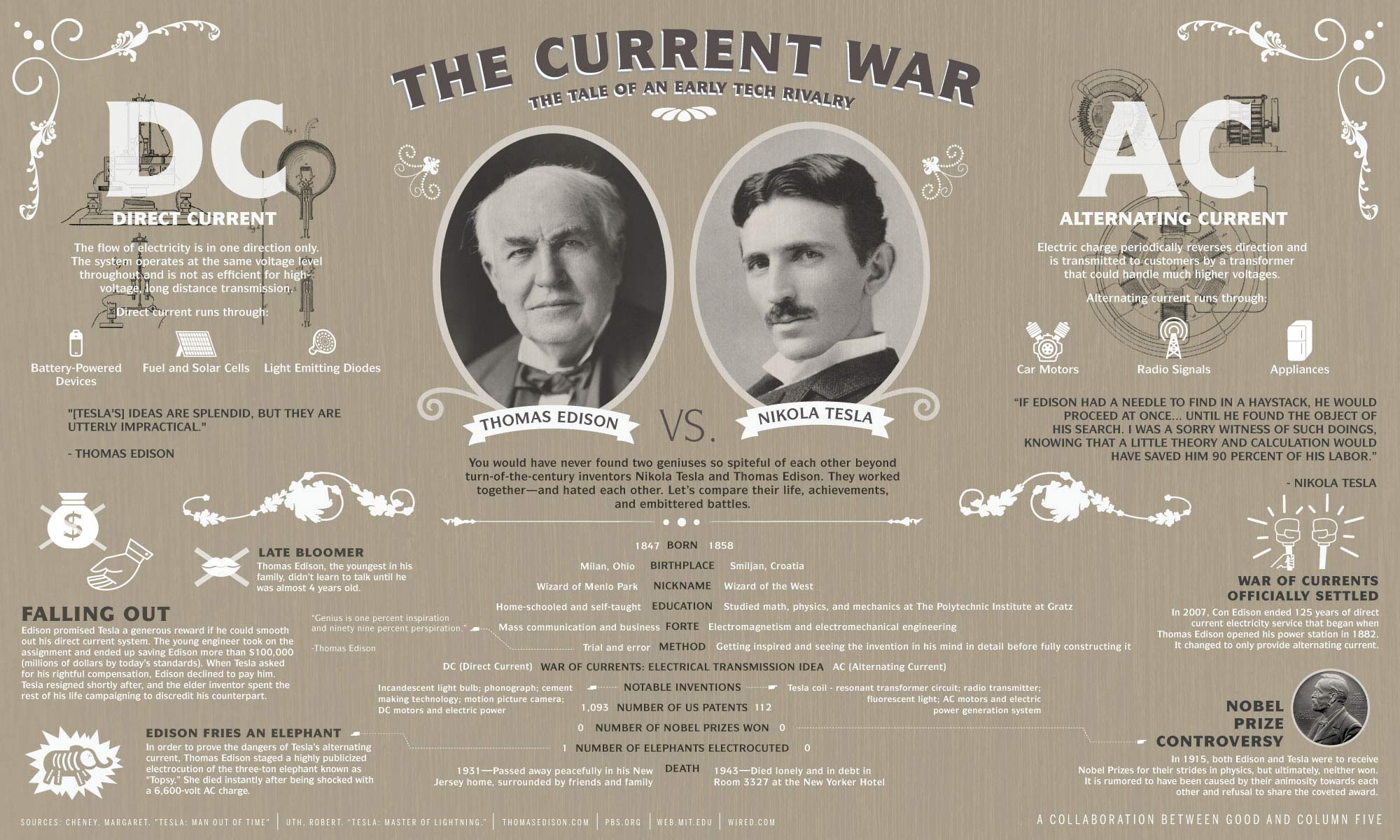
Meanwhile, a murderer was about to be executed in the first electric chair at New York's Auburn State Prison. Professor Brown had succeeded in illegally purchasing a used Westinghouse generator in order to demonstrate once and for all the extreme danger of alternating current. The guinea pig was William Kemmler, a convicted ax-murderer, who died horribly on August 6, 1890, in "an awful spectacle, far worse than hanging." The technique was later dubbed "Westinghousing." In spite of the bad press, good things were happening for Westinghouse and Tesla. The Westinghouse Corporation won the bid for illuminating The Chicago World's Fair, the first all-electric fair in history. The fair was also called the Columbian Exposition — in celebration of the 400th Anniversary of Columbus discovering America. Up against the newly formed General Electric Company (the company that had taken over the Edison Company), Westinghouse undercut GE's million-dollar bid by half. Much of GE's proposed expenses were tied to the amount copper wire necessary to utilize DC power. Westinghouse's winning bid proposed a more efficient, cost-effective AC system. The Columbian Exposition opened on May 1, 1893. That evening, President Grover Cleveland pushed a button and a hundred thousand incandescent lamps illuminated the fairground's neoclassical buildings. This "City of Light" was the work of Tesla, Westinghouse and twelve new thousand-horsepower AC generation units located in the Hall of Machinery. In the Great Hall of Electricity, the Tesla polyphase system of alternating current power generation and transmission was proudly displayed. For the twenty-seven million people who attended the fair, it was dramatically clear that the power of the future was AC. From that point forward more than 80 percent of all the electrical devices ordered in the United States were for alternating current. Harnessing Niagara The Niagara Falls Power Project was an act of pure technological optimism. Americans had dreamed of pressing the Falls into "an honest day's work" since the first pioneer sawmill had been built there in 1725. But schemes for extracting power had never been adequately conceived. Since his childhood, Tesla himself had dreamed of harnessing the power of the great natural wonder. And in late 1893, his dream became a reality, when Westinghouse was awarded the contract to create the powerhouse. The contract came as a result of a failed competition spearheaded by the international Niagara Falls Commission. The commission, charged with planning the power project, had solicited proposals from experts around the world only to reject them all. The schemes ranged from a system using pneumatic pressure to one requiring ropes, springs and pulleys. And there were proposals to transmit DC electricity, one endorsed by Edison. At the head of the commission was Lord Kelvin, the famous British physicist, who had been as opposed to alternating current as Edison until he attended the Chicago Exposition. Now, a strong convert to AC, Kelvin and his commission asked Westinghouse to use alternating current to harness the power of the falls. The construction period was traumatic for engineers, mechanics and workers, but it weighed most heavily on investors. Project backers included several of the wealthiest men in America and Europe, including: J. P. Morgan, John Jacob Astor, Lord Rothschild, and W. K. Vanderbilt. After a five-year nightmare of doubt and financial crises, the project approached completion. Tesla had not doubted the results for a moment. The investors, however, were not at all sure the system would work. While the machines were running smoothly in Tesla's three-dimensional imagination, they were still unproved and expensive. 
But the worries were unwarranted. When the switch was thrown, the first power reached Buffalo at midnight, November 16, 1896. The Niagara Falls Gazette reported that day, "The turning of a switch in the big powerhouse at Niagara completed a circuit which caused the Niagara River to flow uphill." The first one thousand horsepower of electricity surging to Buffalo was claimed by the street railway company, but already the local power company had orders from residents for five thousand more. Within a few years the number of generators at Niagara Falls reached the planned ten, and power lines were electrifying New York City. Broadway was ablaze with lights; the elevated, street railways, and subway system rumbled; and even the Edison systems converted to alternating current. But there were complications. Both the Westinghouse and General Electric corporations were morally and financially drained by the War of the Currents. Years of litigation, the absorption of Edison's company and others by professional managers at GE, and the financial teetering of Westinghouse all contributed to a takeover. This was the era of the Robber Barons, and one of the biggest was ready to make his move. J. P. Morgan, hoping to bring all U.S. hydroelectric power under his control, proceeded to manipulate stock market forces with the intention of starving out Westinghouse and buying the Tesla patents. Thanks in part to Tesla, this did not happen. Westinghouse called on the inventor, pleading for an escape from the initial contract that gave Tesla generous royalties. In a magnanimous and history-making gesture, Tesla said he tore up the contract. He was, after all, grateful to the one man who had believed in his invention. And he was convinced that greater inventions lay ahead. The Westinghouse Electric Company was saved for future triumphs. Tesla, although sharing the glory, was left forever afterward in recurring financial difficulties. Solar Energy Though solar energy has found a dynamic and established role in today’s clean energy economy, there’s a long history behind photovoltaics (PV) that brought the concept of solar energy to fruition. With the way the cost of solar has plummeted in the past decade, it’s easy to forget that going solar had a completely different meaning even just 15 years ago. Let’s go back a few centuries to the origins of solar PV and explore the history of solar energy and silicon solar technology. In theory, solar energy was used by humans as early as 7th century B.C. when history tells us that humans used sunlight to light fires with magnifying glass materials. Later, in 3rd century B.C., the Greeks and Romans were known to harness solar power with mirrors to light torches for religious ceremonies. These mirrors became a normalized tool referred to as “burning mirrors.” Chinese civilization documented the use of mirrors for the same purpose later in 20 A.D. Another early use for solar energy that is still popular today was the concept of “sunrooms” in buildings. These sunrooms used massive windows to direct sunlight into one concentrated area. Some of the iconic Roman bathhouses, typically those situated on the south-facing side of buildings, were sunrooms. Later in the 1200s A.D., ancestors to the Pueblo Native Americans known as the Anasazi situated themselves in south-facing abodes on cliffs to capture the sun’s warmth during cold winter months. In the late 1700s and 1800s, researchers and scientists had success using sunlight to power ovens for long voyages. They also harnessed the power of the sun to produce solar-powered steamboats. Ultimately, it’s clear that even thousands of years before the era of solar panels, the concept of manipulating the power of the sun was a common practice. 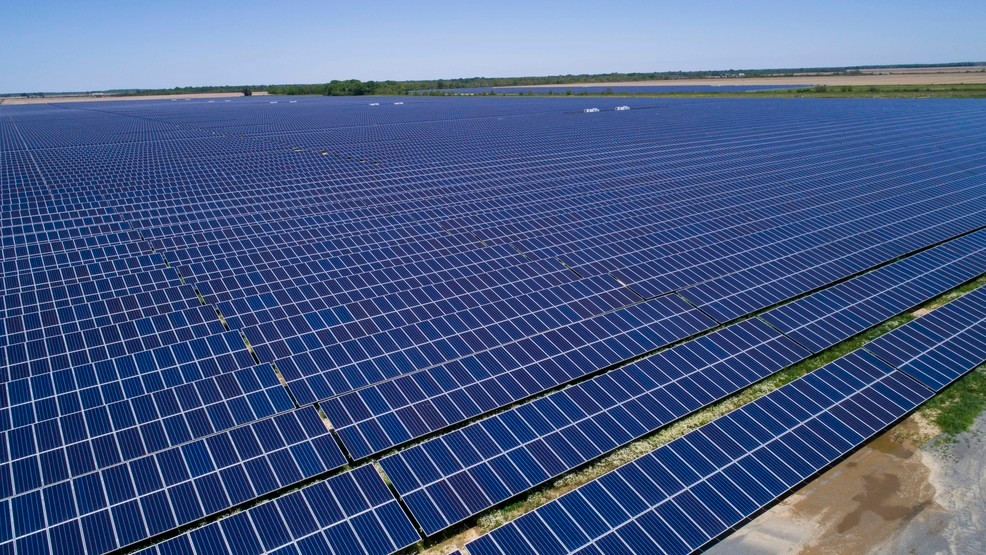
1800’s: Light and Electricity In the first chapter of solar history was the discovery that light was related to electricity. The first solar cells or (photocells) did not produce much power and used an element called selenium (Se). They were often used as light sensors for cameras or other electronic eye applications since they could only convert a mere 0.5% of the sun’s energy into electricity. In 1839, Alexandre Edmond Becquerel opened the door to solar energy, showing a strong relationship between light and electricity. In 1873, Willoughby Smith accidentally discovered photoconductivity in Selenium. Shortly thereafter, William Grylls Adams and his student Richard Day discovered that when Selenium (Se) was exposed to light, it produced electricity. While it wasn’t perfect, it was the first step towards the energy revolution — proving that sunlight itself could be converted into usable electricity. In 1887, Heinrich Hertz observed the photoelectric effect and the production and reception of electromagnetic waves, also known as the Hertz effect. This lead to more research by researchers like Hallwachs, Hoor, Righi, and Stoletow. From 1888-1891, Aleksandr Stoletov found a way to measure the relationship between the intensity of light, and the electric current it generated, based on Heinrich Hertz’s discoveries. 1900’s: Quantum Mechanics When Einstein and Millikan related light energy to movement at a quantum level, this paved the way for future solar research (and quantum mechanics). In 1902, Lenard observed that the energy of individual electrons increased with the frequency of light. In 1905, Albert Einstein published a paper taking the hypothesis that light energy was at a quantum level and making it into a formula. This is the fundamental theory that has driven the solar energy revolution and quantum mechanics. *Einstein was awarded the Nobel Prize in 1921 for “his discovery of the law of the photoelectric effect” In 1914, Robert Millikan’s experiments supported Einstein’s model of the photoelectric effect. *Millikan was awarded the Nobel Prize in 1923 for “his work on the elementary charge of electricity and on the photoelectric effect” In 1946, Russel Ohl patented the modern junction semiconductor solar cell. In 1947, Passive solar buildings in the United States were in such demand, as a result of scarce energy during the prolonged W.W.II, that Libbey-Owens-Ford Glass Company published a book entitled Your Solar House, which profiled forty-nine of the nation’s greatest solar architects. 1950’s: The Space Race Soon after the discovery of the transistor, the modern solar cell —the solar battery— was announced to the world in 1954 with an efficiency of 6%. This new iteration was based on mono-crystalline Silicon (Si). These were commercially produced and applied to space exploration missions, which drove the development of higher efficiencies in solar cells during the space race. In 1953, Dr. Dan Trivich, Wayne State University, makes the first theoretical calculations of the efficiencies of various materials of different band gap widths based on the spectrum of the sun. In 1954, the first photovoltaic cell was publicly presented at Bell Laboratories by Calvin Souther Fuller, Daryl Chapin, and Gerald Pearson. Bell Telephone Laboratories produced a silicon solar cell with 4% efficiency and later achieved 11% efficiency. In 1958, solar cells were applied to the Vanguard satellite as an alternative to a battery. In 1959, the US launched Explorer 6 launched with wing-shaped solar arrays consisting of Hoffman solar cells. In 1960, Hoffman Electronics achieves 14% efficient photovoltaic cells. By 1960, solar cells were the main power source for orbiting satellites and probes. In 1963, Japan installs a 242-watt, photovoltaic array on a lighthouse, the world’s largest array at that time. In 1969, The Odeillo solar furnace, located in Odeillo, France was constructed. This featured an 8-story parabolic mirror. In 1973, Elliot Berman founded Solar Power Corporation, a subsidiary of Exxon, and made huge strides in the cost of solar cell production. In 1973, The University of Delaware builds “Solar One,” one of the world’s first photovoltaic (PV) powered residences. The system is a PV/thermal hybrid. The roof-integrated arrays fed surplus power through a special meter to the utility during the day and purchased power from the utility at night. In addition to electricity, the arrays acted as flat-plate thermal collectors, with fans blowing the warm air from over the array to phase-change heat-storage bins. In 1976, David Carlson and Christopher Wronski, RCA Laboratories, fabricate first amorphous silicon photovoltaic cells. In 1977, total photovoltaic manufacturing production exceeds 500 kilowatts. In 1981, Paul MacCready builds the first solar-powered aircraft—the Solar Challenger—and flies it from France to England across the English Channel. The aircraft had over 16,000 solar cells mounted on its wings, which produced 3,000 watts of power. In 1982, the first, photovoltaic megawatt-scale power station goes on-line in Hisperia, California. It has a 1-megawatt capacity system, developed by ARCO Solar, with modules on 108 dual-axis trackers. In 1982, Australian Hans Tholstrup drives the first solar-powered car—the Quiet Achiever—almost 2,800 miles between Sydney and Perth in 20 days—10 days faster than the first gasoline-powered car to do so. In 1982, the U.S. Department of Energy, along with an industry consortium, begins operating Solar One, a 10-megawatt central-receiver demonstration project. The project established the feasibility of power-tower systems, a solar-thermal electric or concentrating solar power technology. In 1985, the University of South Wales breaks the 20% efficiency barrier for silicon solar cells under 1-sun conditions. In 1986, the world’s largest solar thermal facility, located in Kramer Junction, California, was commissioned. The solar field contained rows of mirrors that concentrated the sun’s energy onto a system of pipes circulating a heat transfer fluid. The heat transfer fluid was used to produce steam, which powered a conventional turbine to generate electricity. In 1993, Pacific Gas & Electric completes installation of the first grid-supported photovoltaic system in Kerman, California. The 500-kilowatt system was the first “distributed power” effort. In 1994, the National Renewable Energy Laboratory develops a solar cell—made from gallium indium phosphide and gallium arsenide—that becomes the first one to exceed 30% conversion efficiency. In 1999, Spectrolab, Inc. and the National Renewable Energy Laboratory develop a photovoltaic solar cell that converts 32.3 percent of the sunlight that hits it into electricity. The high conversion efficiency was achieved by combining three layers of photovoltaic materials into a single solar cell 2000’s: Improvement In recent years, research has moved towards designing lightweight, flexible, and highly efficient solar cells. Manufacturers have added strength, protection, and widened the spectrum of light a solar cell can convert into energy. 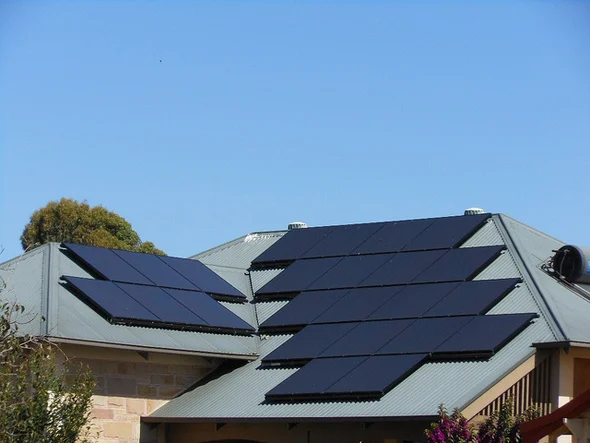
Now The fifth chapter in solar cells is happening now with lots of innovation happening in the solar cell market. Many types of cells are being produced or tested such as organic, perovskite, multijunction, concentrator, and many others. Solar cell efficiencies are up to 42% in the lab meaning that 42% of the sun’s energy can be converted into electricity using multi-junction concentrator solar cells. Research for higher efficiencies, lower costs, and new materials are all active areas of research. There is a lot more history! The above history talks about the progression of solar cells themselves through time but if you’d like to learn more about what events took place to cause change and movement in the industry I suggest reading this article by John Perlin on NREL’s website https://www.nrel.gov/docs/fy04osti/33947.pdf or by checking out his book for a complete history on solar energy entitled Let It Shine: The 6,000-Year Story of Solar Energy. Nuclear Energy Exploring the nature of the atom Uranium was discovered in 1789 by Martin Klaproth, a German chemist, and named after the planet Uranus. Ionising radiation was discovered by Wilhelm Rontgen in 1895, by passing an electric current through an evacuated glass tube and producing continuous X-rays. Then in 1896 Henri Becquerel found that pitchblende (an ore containing radium and uranium) caused a photographic plate to darken. He went on to demonstrate that this was due to beta radiation (electrons) and alpha particles (helium nuclei) being emitted. Villard found a third type of radiation from pitchblende: gamma rays, which were much the same as X-rays. Then in 1896 Pierre and Marie Curie gave the name 'radioactivity' to this phenomenon, and in 1898 isolated polonium and radium from the pitchblende. Radium was later used in medical treatment. In 1898 Samuel Prescott showed that radiation destroyed bacteria in food. In 1902 Ernest Rutherford showed that radioactivity, as a spontaneous event emitting an alpha or beta particle from the nucleus, created a different element. He went on to develop a fuller understanding of atoms and in 1919 he fired alpha particles from a radium source into nitrogen and found that nuclear rearrangement was occurring, with formation of oxygen. Niels Bohr was another scientist who advanced our understanding of the atom and the way electrons were arranged around its nucleus through to the 1940s. By 1911 Frederick Soddy discovered that naturally-radioactive elements had a number of different isotopes (radionuclides), with the same chemistry. Also in 1911, George de Hevesy showed that such radionuclides were invaluable as tracers, because minute amounts could readily be detected with simple instruments. In 1932 James Chadwick discovered the neutron. Also in 1932 Cockcroft and Walton produced nuclear transformations by bombarding atoms with accelerated protons, then in 1934 Irene Curie and Frederic Joliot found that some such transformations created artificial radionuclides. The next year Enrico Fermi found that a much greater variety of artificial radionuclides could be formed when neutrons were used instead of protons. Fermi continued his experiments, mostly producing heavier elements from his targets, but also, with uranium, some much lighter ones. At the end of 1938 Otto Hahn and Fritz Strassmann in Berlin showed that the new lighter elements were barium and others which were about half the mass of uranium, thereby demonstrating that atomic fission had occurred. Lise Meitner and her nephew Otto Frisch, working under Niels Bohr, then explained this by suggesting that the neutron was captured by the nucleus, causing severe vibration leading to the nucleus splitting into two not quite equal parts. They calculated the energy release from this fission as about 200 million electron volts. Frisch then confirmed this figure experimentally in January 1939. This was the first experimental confirmation of Albert Einstein's paper putting forward the equivalence between mass and energy, which had been published in 1905. 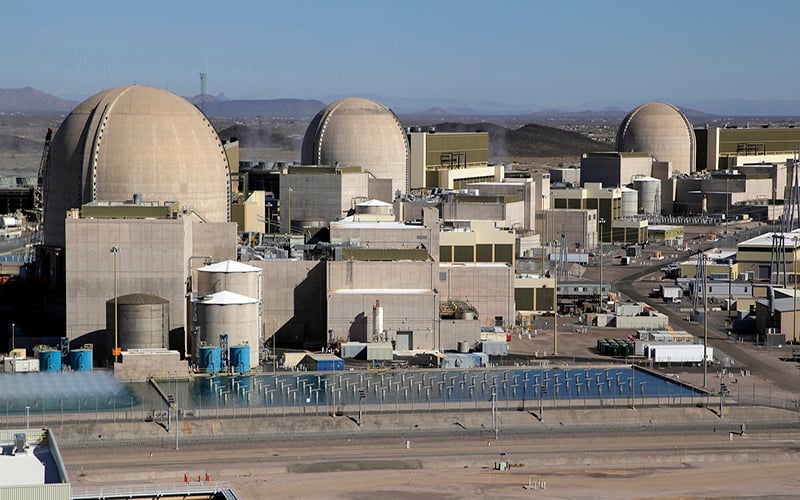
Harnessing nuclear fission These 1939 developments sparked activity in many laboratories. Hahn and Strassmann showed that fission not only released a lot of energy, but that it also released additional neutrons which could cause fission in other uranium nuclei and possibly a self-sustaining chain reaction leading to an enormous release of energy. This suggestion was soon confirmed experimentally by Joliot and his co-workers in Paris, and Leo Szilard working with Fermi in New York. Bohr soon proposed that fission was much more likely to occur in the uranium-235 isotope than in U-238 and that fission would occur more effectively with slow-moving neutrons than with fast neutrons. The latter point was confirmed by Szilard and Fermi, who proposed using a 'moderator' to slow down the emitted neutrons. Bohr and Wheeler extended these ideas into what became the classical analysis of the fission process, and their paper was published only two days before war broke out in 1939. Another important factor was that U-235 was then known to comprise only 0.7% of natural uranium, with the other 99.3% being U-238, with similar chemical properties. Hence the separation of the two to obtain pure U-235 would be difficult and would require the use of their very slightly different physical properties. This increase in the proportion of the U-235 isotope became known as 'enrichment'. The remaining piece of the fission/atomic bomb concept was provided in 1939 by Francis Perrin who introduced the concept of the critical mass of uranium required to produce a self-sustaining release of energy. His theories were extended by Rudolf Peierls at Birmingham University and the resulting calculations were of considerable importance in the development of the atomic bomb. Perrin's group in Paris continued their studies and demonstrated that a chain reaction could be sustained in a uranium-water mixture (the water being used to slow down the neutrons) provided external neutrons were injected into the system. They also demonstrated the idea of introducing neutron-absorbing material to limit the multiplication of neutrons and thus control the nuclear reaction (which is the basis for the operation of a nuclear power station). Peierls had been a student of Werner Heisenberg, who from April 1939 presided over the German nuclear energy project under the German Ordnance Office. Initially this was directed towards military applications, and by the end of 1939 Heisenberg had calculated that nuclear fission chain reactions might be possible. When slowed down and controlled in a 'uranium machine' (nuclear reactor), these chain reactions could generate energy; when uncontrolled, they would lead to a nuclear explosion many times more powerful than a conventional explosion. It was suggested that natural uranium could be used in a uranium machine, with heavy water moderator (from Norway), but it appears that researchers were unaware of delayed neutrons which would enable a nuclear reactor to be controlled. Heisenberg noted that they could use pure uranium-235, a rare isotope, as an explosive, but he apparently believed that the critical mass required was higher than was practical. In the summer of 1940, Carl Friedrich von Weizsäcker, a younger colleague and friend of Heisenberg's, drew upon publications by scholars working in Britain, Denmark, France, and the USA to conclude that if a uranium machine could sustain a chain reaction, then some of the more common uranium-238 would be transmuted into 'element 94', now called plutonium. Like uranium-235, element 94 would be an incredibly powerful explosive. In 1941, von Weizsäcker went so far as to submit a patent application for using a uranium machine to manufacture this new radioactive element. By 1942 the military objective was wound down as impractical, requiring more resources than available. The priority became building rockets. However, the existence of the German Uranverein project provided the main incentive for wartime development of the atomic bomb by Britain and the USA. Nuclear physics in Russia Russian nuclear physics predates the Bolshevik Revolution by more than a decade. Work on radioactive minerals found in central Asia began in 1900 and the St Petersburg Academy of Sciences began a large-scale investigation in 1909. The 1917 Revolution gave a boost to scientific research and over 10 physics institutes were established in major Russian towns, particularly St Petersburg, in the years which followed. In the 1920s and early 1930s many prominent Russian physicists worked abroad, encouraged by the new regime initially as the best way to raise the level of expertise quickly. These included Kirill Sinelnikov, Pyotr Kapitsa and Vladimir Vernadsky. By the early 1930s there were several research centres specialising in nuclear physics. Kirill Sinelnikov returned from Cambridge in 1931 to organise a department at the Ukrainian Institute of Physics and Technology (later renamed Kharkov Institute of Physics and Technology, KIPT) in Kharkov, which had been set up in 1928. Academician Abram Ioffe formed another group at the Leningrad Physics and Technical Institute (FTI), later becoming independent as the Ioffe Institute, including the young Igor Kurchatov. Ioffe was its first director, through to 1950. By the end of the decade, there were cyclotrons installed at the Radium Institute and Leningrad FTI (the biggest in Europe). But by this time many scientists were beginning to fall victim to Stalin's purges – half the staff of Kharkov Institute, for instance, was arrested in 1939. Nevertheless, 1940 saw great advances being made in the understanding of nuclear fission including the possibility of a chain reaction. At the urging of Kurchatov and his colleagues, the Academy of Sciences set up a "Committee for the Problem of Uranium" in June 1940 chaired by Vitaly Khlopin, and a fund was established to investigate the central Asian uranium deposits. The Radium Institute had a factory in Tartarstan used by Khlopin to produce Russia’s first high-purity radium. Germany's invasion of Russia in 1941 turned much of this fundamental research to potential military applications. Conceiving the atomic bomb British scientists had kept pressure on their government. The refugee physicists Peierls and Frisch (who had stayed in England with Peierls after the outbreak of war), gave a major impetus to the concept of the atomic bomb in a three-page document known as the Frisch-Peierls Memorandum. In this they predicted that an amount of about 5kg of pure U-235 could make a very powerful atomic bomb equivalent to several thousand tonnes of dynamite. They also suggested how such a bomb could be detonated, how the U-235 could be produced, and what the radiation effects might be in addition to the explosive effects. They proposed thermal diffusion as a suitable method for separating the U-235 from the natural uranium. This memorandum stimulated a considerable response in Britain at a time when there was little interest in the USA. A group of eminent scientists known as the MAUD Committee was set up in Britain and supervised research at the Universities of Birmingham, Bristol, Cambridge, Liverpool and Oxford. The chemical problems of producing gaseous compounds of uranium and pure uranium metal were studied at Birmingham University and Imperial Chemical Industries (ICI). Dr Philip Baxter at ICI made the first small batch of gaseous uranium hexafluoride for Professor James Chadwick in 1940. ICI received a formal contract later in 1940 to make 3kg of this vital material for the future work. Most of the other research was funded by the universities themselves. Two important developments came from the work at Cambridge. The first was experimental proof that a chain reaction could be sustained with slow neutrons in a mixture of uranium oxide and heavy water, ie. the output of neutrons was greater than the input. The second was by Bretscher and Feather based on earlier work by Halban and Kowarski soon after they arrived in Britain from Paris. When U-235 and U-238 absorb slow neutrons, the probability of fission in U-235 is much greater than in U-238. The U-238 is more likely to form a new isotope U-239, and this isotope rapidly emits an electron to become a new element with a mass of 239 and an Atomic Number of 93. This element also emits an electron and becomes a new element of mass 239 and Atomic Number 94, which has a much greater half-life. Bretscher and Feather argued on theoretical grounds that element 94 would be readily fissionable by slow and fast neutrons, and had the added advantages that it was chemically different to uranium and therefore could easily be separated from it. This new development was also confirmed in independent work by McMillan and Abelson in the USA in 1940. Dr Kemmer of the Cambridge team proposed the names neptunium for the new element # 93 and plutonium for # 94 by analogy with the outer planets Neptune and Pluto beyond Uranus (uranium, element # 92). The Americans fortuitously suggested the same names, and the identification of plutonium in 1941 is generally credited to Glenn Seaborg. Developing the concepts By the end of 1940 remarkable progress had been made by the several groups of scientists coordinated by the MAUD Committee and for the expenditure of a relatively small amount of money. All of this work was kept secret, whereas in the USA several publications continued to appear in 1940 and there was also little sense of urgency. By March 1941 one of the most uncertain pieces of information was confirmed - the fission cross-section of U-235. Peierls and Frisch had initially predicted in 1940 that almost every collision of a neutron with a U-235 atom would result in fission, and that both slow and fast neutrons would be equally effective. It was later discerned that slow neutrons were very much more effective, which was of enormous significance for nuclear reactors but fairly academic in the bomb context. Peierls then stated that there was now no doubt that the whole scheme for a bomb was feasible provided highly enriched U-235 could be obtained. The predicted critical size for a sphere of U-235 metal was about 8kg, which might be reduced by use of an appropriate material for reflecting neutrons. However, direct measurements on U-235 were still necessary and the British pushed for urgent production of a few micrograms. The final outcome of the MAUD Committee was two summary reports in July 1941. One was on 'Use of Uranium for a Bomb' and the other was on 'Use of Uranium as a Source of Power'. The first report concluded that a bomb was feasible and that one containing some 12 kg of active material would be equivalent to 1,800 tons of TNT and would release large quantities of radioactive substances which would make places near the explosion site dangerous to humans for a long period. It estimated that for a plant to produce 1kg of U-235 per day it would cost £5 million and would require a large skilled labour force that was also needed for other parts of the war effort. Suggesting that the Germans could also be working on the bomb, it recommended that the work should be continued with high priority in cooperation with the Americans, even though they seemed to be concentrating on the future use of uranium for power and naval propulsion. The second MAUD Report concluded that the controlled fission of uranium could be used to provide energy in the form of heat for use in machines, as well as providing large quantities of radioisotopes which could be used as substitutes for radium. It referred to the use of heavy water and possibly graphite as moderators for the fast neutrons, and that even ordinary water could be used if the uranium was enriched in the U-235 isotope. It concluded that the 'uranium boiler' had considerable promise for future peaceful uses but that it was not worth considering during the present war. The Committee recommended that Halban and Kowarski should move to the USA where there were plans to make heavy water on a large scale. The possibility that the new element plutonium might be more suitable than U-235 was mentioned, so that the work in this area by Bretscher and Feather should be continued in Britain. The two reports led to a complete reorganisation of work on the bomb and the 'boiler'. It was claimed that the work of the committee had put the British in the lead and that "in its fifteen months' existence it had proved itself one of the most effective scientific committees that ever existed". The basic decision that the bomb project would be pursued urgently was taken by the Prime Minister, Winston Churchill, with the agreement of the Chiefs of Staff. The reports also led to high level reviews in the USA, particularly by a Committee of the National Academy of Sciences, initially concentrating on the nuclear power aspect. Little emphasis was given to the bomb concept until 7 December 1941, when the Japanese attacked Pearl Harbour and the Americans entered the war directly. The huge resources of the USA were then applied without reservation to developing atomic bombs. The Manhattan Project The Americans increased their effort rapidly and soon outstripped the British. Research continued in each country with some exchange of information. Several of the key British scientists visited the USA early in 1942 and were given full access to all of the information available. The Americans were pursuing three enrichment processes in parallel: Professor Lawrence was studying electromagnetic separation at Berkeley (University of California), E. V. Murphree of Standard Oil was studying the centrifuge method developed by Professor Beams, and Professor Urey was coordinating the gaseous diffusion work at Columbia University. Responsibility for building a reactor to produce fissile plutonium was given to Arthur Compton at the University of Chicago. The British were only examining gaseous diffusion. In June 1942 the US Army took over process development, engineering design, procurement of materials and site selection for pilot plants for four methods of making fissionable material (because none of the four had been shown to be clearly superior at that point) as well as the production of heavy water. With this change, information flow to Britain dried up. This was a major setback to the British and the Canadians who had been collaborating on heavy water production and on several aspects of the research program. Thereafter, Churchill sought information on the cost of building a diffusion plant, a heavy water plant and an atomic reactor in Britain. After many months of negotiations an agreement was finally signed by Mr Churchill and President Roosevelt in Quebec in August 1943, according to which the British handed over all of their reports to the Americans and in return received copies of General Groves' progress reports to the President. The latter showed that the entire US program would cost over $1,000 million, all for the bomb, as no work was being done on other applications of nuclear energy. Construction of production plants for electromagnetic separation (in calutrons) and gaseous diffusion was well under way. An experimental graphite pile constructed by Fermi had operated at the University of Chicago in December 1942 – the first controlled nuclear chain reaction. A full-scale production reactor for plutonium was being constructed at Argonne, with further ones at Oak Ridge and then Hanford, plus a reprocessing plant to extract the plutonium. Four plants for heavy water production were being built, one in Canada and three in the USA. A team under Robert Oppenheimer at Los Alamos in New Mexico was working on the design and construction of both U-235 and Pu-239 bombs. The outcome of the huge effort, with assistance from the British teams, was that sufficient Pu-239 and highly enriched U-235 (from calutrons and diffusion at Oak Ridge) was produced by mid-1945. The uranium mostly originated from the Belgian Congo. The first atomic device tested successfully at Alamagordo in New Mexico on 16 July 1945. It used plutonium made in a nuclear pile. The teams did not consider that it was necessary to test a simpler U-235 device. The first atomic bomb, which contained U-235, was dropped on Hiroshima on 6 August 1945. The second bomb, containing Pu-239, was dropped on Nagasaki on 9 August. That same day, the USSR declared war on Japan. On 10 August 1945 the Japanese Government surrendered. The Soviet bomb Initially Stalin was not enthusiastic about diverting resources to develop an atomic bomb, until intelligence reports suggested that such research was under way in Germany, Britain and the USA. Consultations with Academicians Ioffe, Kapitsa, Khlopin and Vernadsky convinced him that a bomb could be developed relatively quickly and he initiated a modest research program in 1942. Igor Kurchatov, then relatively young and unknown, was chosen to head it and in 1943 he became Director of Laboratory No.2 recently established on the outskirts of Moscow. This was later renamed LIPAN, then became the Kurchatov Institute of Atomic Energy. Overall responsibility for the bomb program rested with Security Chief Lavrenti Beria and its administration was undertaken by the First Main Directorate (later called the Ministry of Medium Machine Building). Research had three main aims: to achieve a controlled chain reaction; to investigate methods of isotope separation; and to look at designs for both enriched uranium and plutonium bombs. Attempts were made to initiate a chain reaction using two different types of atomic pile: one with graphite as a moderator and the other with heavy water. Three possible methods of isotope separation were studied: counter-current thermal diffusion, gaseous diffusion and electromagnetic separation. After the defeat of Nazi Germany in May 1945, German scientists were "recruited" to the bomb program to work in particular on isotope separation to produce enriched uranium. This included research into gas centrifuge technology in addition to the three other enrichment technologies. The test of the first US atomic bomb in July 1945 had little impact on the Soviet effort, but by this time, Kurchatov was making good progress towards both a uranium and a plutonium bomb. He had begun to design an industrial scale reactor for the production of plutonium, while those scientists working on uranium isotope separation were making advances with the gaseous diffusion method. It was the bombing of Hiroshima and Nagasaki the following month which gave the program a high profile and construction began in November 1945 of a new city in the Urals which would house the first plutonium production reactors -- Chelyabinsk-40 (Later known as Chelyabinsk-65 or the Mayak production association). This was the first of ten secret nuclear cities to be built in the Soviet Union. The first of five reactors at Chelyabinsk-65 came on line in 1948. This town also housed a processing plant for extracting plutonium from irradiated uranium. As for uranium enrichment technology, it was decided in late 1945 to begin construction of the first gaseous diffusion plant at Verkh-Neyvinsk (later the closed city of Sverdlovsk-44), some 50 kilometres from Yekaterinburg (formerly Sverdlovsk) in the Urals. Special design bureaux were set up at the Leningrad Kirov Metallurgical and Machine-Building Plant and at the Gorky (Nizhny Novgorod) Machine Building Plant. Support was provided by a group of German scientists working at the Sukhumi Physical Technical Institute. In April 1946 design work on the bomb was shifted to Design Bureau-11 – a new centre at Sarova some 400 kilometres from Moscow (subsequently the closed city of Arzamas-16). More specialists were brought in to the program including metallurgist Yefim Slavsky who was given the immediate task of producing the very pure graphite Kurchatov needed for his plutonium production pile constructed at Laboratory No. 2 known as F-1. The pile was operated for the first time in December 1946. Support was also given by Laboratory No.3 in Moscow – now the Institute of Theoretical and Experimental Physics – which had been working on nuclear reactors. Work at Arzamas-16 was influenced by foreign intelligence gathering and the first device was based closely on the Nagasaki bomb (a plutonium device). In August 1947 a test site was established near Semipalatinsk in Kazakhstan and was ready for the detonation two years later of the first bomb, RSD-1. Even before this was tested in August 1949, another group of scientists led by Igor Tamm and including Andrei Sakharov had begun work on a hydrogen bomb. Revival of the 'nuclear boiler' By the end of World War II, the project predicted and described in detail only five and a half years before in the Frisch-Peierls Memorandum had been brought to partial fruition, and attention could turn to the peaceful and directly beneficial application of nuclear energy. Post-war, weapons development continued on both sides of the "iron curtain", but a new focus was on harnessing the great atomic power, now dramatically (if tragically) demonstrated, for making steam and electricity. In the course of developing nuclear weapons the Soviet Union and the West had acquired a range of new technologies and scientists realised that the tremendous heat produced in the process could be tapped either for direct use or for generating electricity. It was also clear that this new form of energy would allow development of compact long-lasting power sources which could have various applications, not least for shipping, and especially in submarines. The first nuclear reactor to produce electricity (albeit a trivial amount) was the small Experimental Breeder reactor (EBR-1) designed and operated by Argonne National Laboratory and sited in Idaho, USA. The reactor started up in December 1951. In 1953 President Eisenhower proposed his "Atoms for Peace" program, which reoriented significant research effort towards electricity generation and set the course for civil nuclear energy development in the USA. In the Soviet Union, work was under way at various centres to refine existing reactor designs and develop new ones. The Institute of Physics and Power Engineering (FEI) was set up in May 1946 at the then-closed city of Obninsk, 100 km southwest of Moscow, to develop nuclear power technology. The existing graphite-moderated channel-type plutonium production reactor was modified for heat and electricity generation and in June 1954 the world's first nuclear powered electricity generator began operation at the FEI in Obninsk. The AM-1 (Atom Mirny – peaceful atom) reactor was water-cooled and graphite-moderated, with a design capacity of 30 MWt or 5 MWe. It was similar in principle to the plutonium production reactors in the closed military cities and served as a prototype for other graphite channel reactor designs including the Chernobyl-type RBMK (reaktor bolshoi moshchnosty kanalny – high power channel reactor) reactors. AM-1 produced electricity until 1959 and was used until 2000 as a research facility and for the production of isotopes. Also in the 1950s FEI at Obninsk was developing fast breeder reactors (FBRs) and lead-bismuth reactors for the navy. In April 1955 the BR-1 (bystry reaktor – fast reactor) fast neutron reactor began operating. It produced no power but led directly to the BR-5, which started up in 1959 with a capacity of 5 MWt, and which was used to do the basic research necessary for designing sodium-cooled FBRs. It was upgraded and modernised in 1973 and then underwent major reconstruction in 1983 to become the BR-10 with a capacity of 8 MWt which is now used to investigate fuel endurance, to study materials and to produce isotopes. The main US effort was under Admiral Hyman Rickover, which developed the pressurised water reactor (PWR) for naval (particularly submarine) use. The PWR used enriched uranium oxide fuel and was moderated and cooled by ordinary (light) water. The Mark 1 prototype naval reactor started up in March 1953 in Idaho, and the first nuclear-powered submarine, USS Nautilus, was launched in 1954. In 1959 both USA and USSR launched their first nuclear-powered surface vessels. The Mark 1 reactor led to the US Atomic Energy Commission building the 60 MWe Shippingport demonstration PWR reactor in Pennsylvania, which started up in 1957 and operated until 1982. Since the USA had a virtual monopoly on uranium enrichment in the West, British development took a different tack and resulted in a series of reactors fuelled by natural uranium metal, moderated by graphite, and gas-cooled. The first of these 50 MWe Magnox types, Calder Hall 1, started up in 1956 and ran until 2003. However, after 1963 (and 26 units) no more were commenced. Britain next embraced the advanced gas-cooled reactor (using enriched oxide fuel) before conceding the pragmatic virtues of the PWR design. Nuclear energy goes commercial In the USA, Westinghouse designed the first fully commercial PWR of 250 MWe, Yankee Rowe, which started up in 1960 and operated to 1992. Meanwhile the boiling water reactor (BWR) was developed by the Argonne National Laboratory, and the first one, Dresden-1 of 250 MWe, designed by General Electric, was started up earlier in 1960. A prototype BWR, Vallecitos, ran from 1957 to 1963. By the end of the 1960s, orders were being placed for PWR and BWR reactor units of more than 1000 MWe. Canadian reactor development headed down a quite different track, using natural uranium fuel and heavy water as a moderator and coolant. The first unit started up in 1962. This CANDU design continues to be refined. France started out with a gas-graphite design similar to Magnox and the first reactor started up in 1956. Commercial models operated from 1959. It then settled on three successive generations of standardised PWRs, which was a very cost-effective strategy. In 1964 the first two Soviet nuclear power plants were commissioned. A 100 MW boiling water graphite channel reactor began operating in Beloyarsk (Urals). In Novovoronezh (Volga region) a new design – a small (210 MW) pressurised water reactor (PWR) known as a VVER (veda-vodyanoi energetichesky reaktor– water cooled power reactor) – was built. The first large RBMK (1,000 MW – high-power channel reactor) started up at Sosnovy Bor near Leningrad in 1973, and in the Arctic northwest a VVER with a rated capacity of 440 MW began operating. This was superseded by a 1000 MWe version which became a standard design. In Kazakhstan the world's first commercial prototype fast neutron reactor (the BN-350) started up in 1972 with a design capacity of 135 MWe (net), producing electricity and heat to desalinate Caspian seawater. In the USA, UK, France and Russia a number of experimental fast neutron reactors produced electricity from 1959, the last of these closing in 2009. This left Russia's BN-600 as the only commercial fast reactor, until joined by a BN-800 in 2016. Around the world, with few exceptions, other countries have chosen light-water designs for their nuclear power programmes, so that today 69% of the world capacity is PWR and 20% BWR. Nuclear energy expands and stagnates Through the 60s and 70s, lots of nuclear reactors are built for making electricity, using designs very similar to those made for the submarines. They work well and produce cheap, emission-free electricity with a very low mining and transportation footprint. A nuclear powered future is envisioned by many. In 1974, France decided to make a major push for nuclear energy, and ended up with 75% of their electricity coming from nuclear reactors. The US built 104 reactors, and got about 20% of its electricity from them. Eventually, labor shortages and construction delays started bringing the cost of nuclear reactors up, slowing their growth. The 1979 Three Mile Island accident and the 1986 Chernobyl accident further slowed the deployment of nuclear reactors. Tighter regulations brought costs higher. According to the Nuclear Regulatory Commission (NRC), the Three Mile Island accident was the most serious accident in "U.S. commercial nuclear power plant operating history, even though it led to no deaths or injuries to plant workers or members of the nearby community." The regulatory uncertainty and delays eventually resulted in an escalation of construction related debt that led to the bankruptcy of Seabrook's major utility owner, Public Service Company of New Hampshire. At the time, the fourth largest bankruptcy in United States corporate history. Among American engineers, the cost increases from implementing the regulatory changes that resulted from the TMI accident were, when eventually finalized, only a few percent of total construction costs for new reactors, primarily relating to the prevention of safety systems from being turned off. With the most significant engineering result of the TMI accident, the recognition that better operator training was needed and that the existing emergency core cooling system of PWRs worked better in a real-world emergency than members of the anti-nuclear movement had routinely claimed. The already slowing rate of new construction along with the shutdown in the 1980s of two existing demonstration nuclear power stations in the Tennessee Valley, United States, when they couldn't economically meet the NRC's new tightened standards, shifted electricity generation to coal-fired power plants. In 1977, following the first oil shock, U.S. President Jimmy Carter made a speech calling the energy crisis the "moral equivalent of war" and prominently supporting nuclear power. However, nuclear power could not compete with cheap oil and gas, particularly after public opposition and regulatory hurdles made new nuclear prohibitively expensive. In 1982, amongst a backdrop of ongoing protests directed at the construction of the first commercial scale breeder reactor in France, a later member of the Swiss Green Party fired five RPG-7 rocket-propelled grenades at the still under construction containment building of the Superphenix reactor. Two grenades hit and caused minor damage to the reinforced concrete outer shell. It was the first time protests reached such heights. After examination of the superficial damage, the prototype fast breeder reactor started and operated for over a decade. The Chernobyl disaster occurred on Saturday 26 April 1986, at the No. 4 reactor in the Chernobyl Nuclear Power Plant, near the city of Pripyat in the north of the Ukrainian SSR. It is considered as the worst nuclear disaster in history both in terms of cost and casualties. The initial emergency response, together with later decontamination of the environment, ultimately involved more than 500,000 personnel and cost an estimated 18 billion Soviet rubles—roughly US$68 billion in 2019, adjusted for inflation. According to some commentators, the Chernobyl disaster played a major part in the reduction in the number of new plant constructions in many other countries. Unlike the Three Mile Island accident the much more serious Chernobyl accident did not increase regulations or engineering changes affecting Western reactors; because the RBMK design, which lacks safety features such as "robust" containment buildings, was only used in the Soviet Union. Over 10 RBMK reactors are still in use today. However, changes were made in both the RBMK reactors themselves (use of a safer enrichment of uranium) and in the control system (preventing safety systems being disabled), amongst other things, to reduce the possibility of a similar accident. Russia now largely relies upon, builds and exports a variant of the PWR, the VVER, with over 20 in use today. An international organization to promote safety awareness and the professional development of operators in nuclear facilities, the World Association of Nuclear Operators (WANO), was created as a direct outcome of the 1986 Chernobyl accident. The organization was created with the intent to share and grow the adoption of nuclear safety culture, technology and community, where before there was an atmosphere of cold war secrecy. Numerous countries, including Austria (1978), Sweden (1980) and Italy (1987) (influenced by Chernobyl) have voted in referendums to oppose or phase out nuclear power. In the late ’90s and ’00s, the phenomenal safety record of the US commercial reactor fleet (0 deaths) and smooth operation of reactors combined with ongoing worries of global climate change due to carbon emissions brings about substantial talk of a "nuclear renaissance", where new builds might start up substantially again. Meanwhile, strong interest in Asia strengthens and ambitious plans to build large fleets are made to satisfy growing energy needs without adding more fossil fuel. Following the Tōhoku earthquake on 11 March 2011, one of the largest earthquakes ever recorded, and a subsequent tsunami off the coast of Japan, the Fukushima Daiichi Nuclear Power Plant suffered three core meltdowns due to failure of the emergency cooling system for lack of electricity supply. This resulted in the most serious nuclear accident since the Chernobyl disaster. The Fukushima Daiichi nuclear accident prompted a re-examination of nuclear safety and nuclear energy policy in many countries and raised questions among some commentators over the future of the renaissance. Germany approved plans to close all its reactors by 2022. Italian nuclear energy plans ended when Italy banned the generation, but not consumption, of nuclear electricity in a June 2011 referendum. China, Switzerland, Israel, Malaysia, Thailand, United Kingdom, and the Philippines reviewed their nuclear power programs. By 2015, the IAEA's outlook for nuclear energy had become more promising. "Nuclear power is a critical element in limiting greenhouse gas emissions," the agency noted, and "the prospects for nuclear energy remain positive in the medium to long term despite a negative impact in some countries in the aftermath of the [Fukushima-Daiichi] accident...it is still the second-largest source worldwide of low-carbon electricity. And the 72 reactors under construction at the start of last year were the most in 25 years." As of 2015, the global trend was for new nuclear power stations coming online to be balanced by the number of old plants being retired. Eight new grid connections were completed by China in 2015. Zero-emission nuclear power is an important part of the climate change mitigation effort. Under IEA Sustainable Development Scenario by 2030 nuclear power and CCUS would have generated 3900 TWh globally while wind and solar 8100 TWh with the ambition to achieve net-zero CO2 emissions by 2070. In order to achieve this goal on average 15 GWe of nuclear power should have been added annually on average. As of 2019 over 60 GW in new nuclear power plants was in construction, mostly in China, Russia, Korea, India and UAE. Many countries in the world are considering Small Modular Reactors with one in Russia connected to the grid in 2020. Countries with at least one nuclear power plant in planning phase include Argentina, Brazil, Bulgaria, the Czech Republic, Egypt, Finland, Hungary, India, Kazakhstan, Poland, Saudi Arabia and Uzbekistan. The future of nuclear power varies greatly between countries, depending on government policies. Some countries, most notably, Germany, have adopted policies of nuclear power phase-out. At the same time, some Asian countries, such as China and India, have committed to rapid expansion of nuclear power. In other countries, such as the United Kingdom and the United States, nuclear power is planned to be part of the energy mix together with renewable energy. Nuclear energy may be one solution to providing clean power while also reversing the impact fossil fuels have had on our climate. These plants would capture carbon dioxide and create a clean energy source with zero emissions, making a carbon-negative process. Scientists propose that 1.8 million lives have already been saved by replacing fossil fuel sources with nuclear power. As of 2019 the cost of extending plant lifetimes is competitive with other electricity generation technologies, including new solar and wind projects. In the United States, licenses of almost half of the operating nuclear reactors have been extended to 60 years. The U.S. NRC and the U.S. Department of Energy have initiated research into light water reactor sustainability which is hoped will lead to allowing extensions of reactor licenses beyond 60 years, provided that safety can be maintained, to increase energy security and preserve low-carbon generation sources. Research into nuclear reactors that can last 100 years, known as Centurion Reactors, is being conducted. As of 2020, a number of US nuclear power plants were cleared by Nuclear Regulatory Commission for operations up to 80 years. |
|||

 |
|||